Adobe MAX 2026 | November 10–12 | Miami Beach, Florida & Online
Artificial intelligence is transforming how brands create content, personalize MarTech experiences and connect with customers. But as AI makes creative production faster, marketing teams face a more important challenge:
How can organizations turn creative innovation into measurable business performance?
The answer goes beyond generating more content. It requires reliable marketing data, connected customer insights and the ability to turn those MarTech insights into action.

Adobe MAX, Adobe's annual creativity conference, takes place November 10–12, 2026, in Miami Beach, Florida, and online. The event brings together designers, marketers and creative professionals to explore the future of digital creativity, including AI-powered workflows, content generation, branding, design, photography and video. For marketing teams, these innovations create opportunities to develop creative variations, experiment with messaging and personalize customer experiences. However, producing more content does not necessarily mean generating better results.
Imagine launching three AI-generated creative variations for the same campaign:
If Martech performance is measured through clicks alone, Variation A may appear to be the winner. But if the objective is qualified leads or revenue, another variation could deliver greater business value. This is the difference between measuring interactions and understanding their contribution to business outcomes.
An Innovative Approach: The Creative-to-Action Intelligence Loop
Devrun's proposed approach connects creative performance, customer behavior and business outcomes through a continuous optimization process:
Create → Activate → Measure → Interpret → Recommend → Optimize
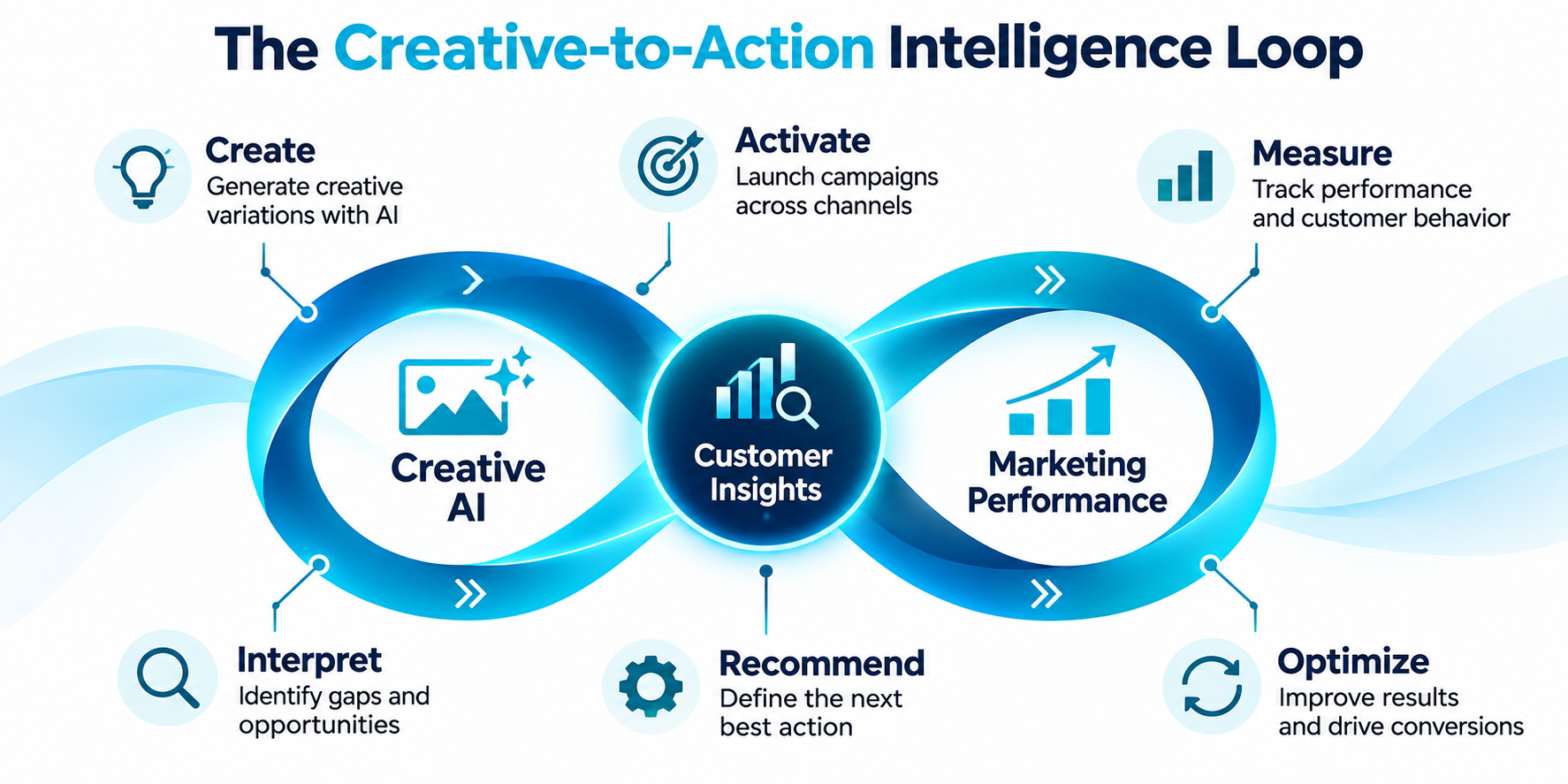
The objective is to move beyond reporting what happened and help marketing teams determine what to do next.
Consider a hypothetical campaign driving visitors to a product landing page. The marketing team notices that traffic is increasing, but purchases are not growing at the same rate.
Using Adobe Analytics Workspace, the team can build a Fallout Visualization to examine the conversion journey:
The analysis reveals a significant drop between viewing product details and adding an item to the cart. Instead of simply increasing advertising spend, the team can investigate the product page experience, compare traffic sources and audience segments, and identify potential barriers to conversion. Adobe Analytics Fallout Visualization supports predefined journey steps, segment comparisons and analysis of what visitors do after dropping out of a journey. Intelligent Alerts can also notify teams when monitored metrics exceed defined anomaly thresholds.
The marketing action: Test a clearer product message, improve the call to action or adjust the landing page experience for the affected audience. Then measure whether the changes improve the add-to-cart and purchase rates.
This is how analytics becomes a decision-support tool rather than just a reporting platform. The numbers above are illustrative; actual findings depend on implementation, event definitions and collected data.
Adobe Experience Platform (AEP) can further support connected customer insights through capabilities such as Real-Time Customer Profile. When supported by reliable event collection, identity management and appropriate governance, organizations can combine relevant customer information to develop a more unified customer view and support audience activation.
However, technology alone does not guarantee actionable insights. Accurate tracking, meaningful KPIs and reliable measurement remain essential. Explore Devrun's related article: Adobe Summit 2027: From Customer Signals to Intelligent Action.
Through real-time actionability and insights, Devrun helps organizations move beyond disconnected reporting and transform marketing analytics into practical business decisions. The focus is on marketing performance measurement, customer journey analytics, real-time insights, actionable recommendations and continuous optimization. Whether an organization uses Adobe Analytics, Google Analytics 4 (GA4) or a broader MarTech ecosystem, the objective is the same: make data useful for better decisions.
As AI accelerates content production, organizations that understand customer signals, evaluate performance and act on insights will be better positioned to improve marketing effectiveness.
More content creates more possibilities. Better analytics turns those possibilities into performance.
Want to turn your marketing data into intelligent action? Book your audit with Devrun to identify opportunities to improve analytics, customer journey measurement and marketing performance.