

The campaign looked successful on paper. Traffic was increasing, conversions were moving in the right direction, and the media team was already preparing to explain the results to leadership. Then the analyst changed the conversion window. The reported performance changed with it.
The campaign and the customers had not changed. What changed was the portion of the customer journey that Google Analytics was able to attribute to the campaign. That distinction becomes increasingly important as enterprise marketing teams connect more advertising platforms, longer customer journeys and more complex measurement models.
Measurement does not simply describe MarTech performance, it defines the version of performance the business sees.
Google Analytics’ August 2026 updates push this idea further, giving organizations more control over attribution, greater visibility into campaign data quality and new ways to move from analysis toward action.

Consider, as an example, a B2B campaign with a $50,000 media investment. A prospect clicks an ad on Day 0, returns on Day 12, downloads content on Day 26, requests a demo on Day 43 and becomes an opportunity on Day 67.
With a seven-day conversion window, the campaign may receive credit for only part of that journey. Extend the window to reflect the actual buying cycle, and the attributed performance can look dramatically different.
For marketing teams, the question is not simply how many conversions occurred. It is whether the attribution model reflects the way customers actually move from engagement to revenue. Google Analytics now allows organizations to configure custom integer conversion windows. Click-through conversion windows can range from 1 to 90 days, while engaged-view conversion windows can range from 1 to 30 days.
One customer journey can produce very different performance stories depending on the attribution window. The right window helps enterprise MarTech teams align measurement with how customers actually move toward conversion.
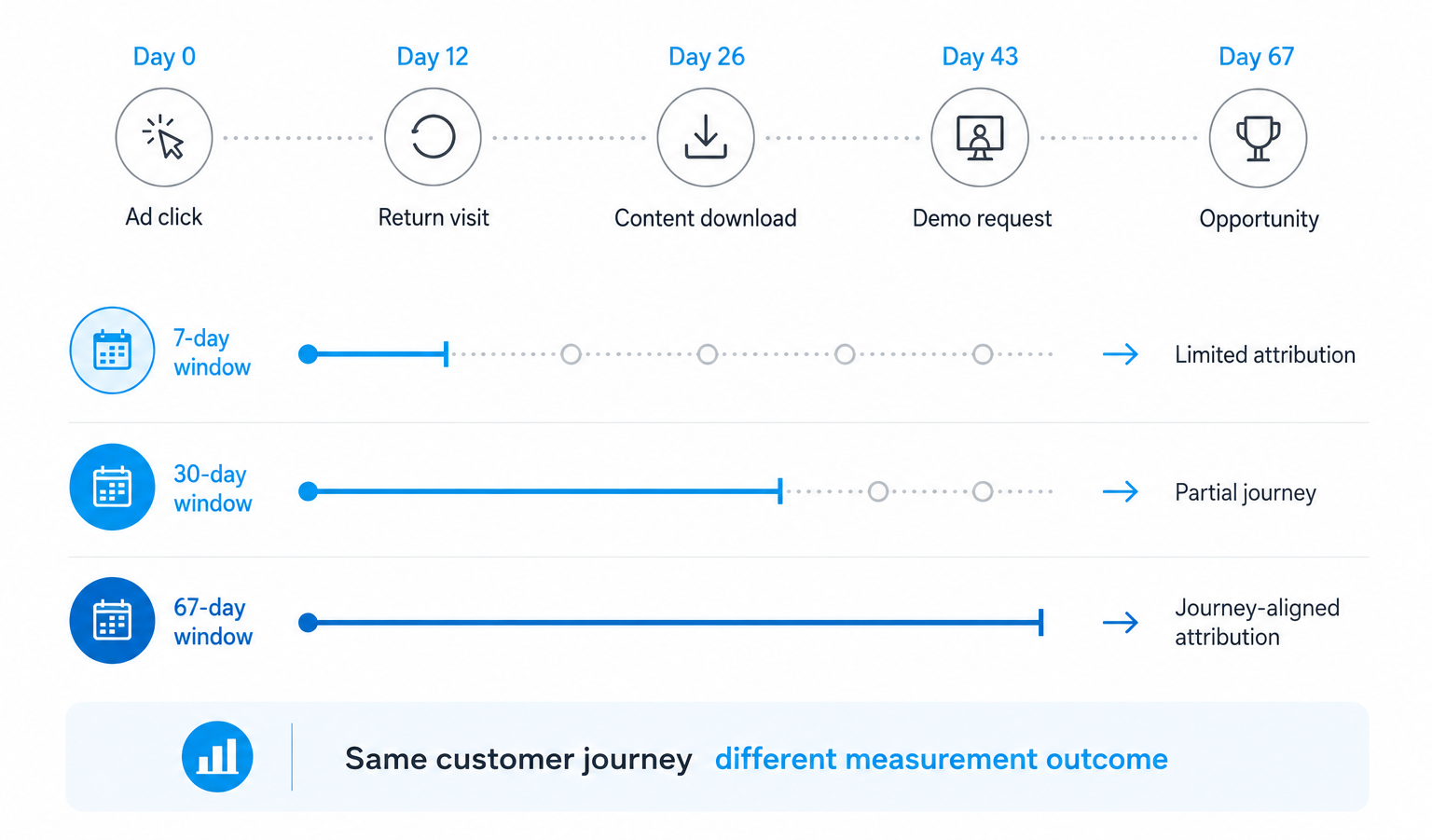
The important change is not the ability to choose another number. It is the ability to make the measurement reflect how customers actually buy. For enterprise marketers, attribution should not be treated as a fixed reporting setting. It should reflect the economics and behavior of the customer journey.
The campaign looks healthy until the analyst examines the imported cost data. The data was imported successfully. But that does not necessarily mean it was connected accurately. Google’s Campaign Data Import Validation Report addresses a different part of the measurement chain: whether imported campaign data actually connects to Analytics data as expected.
The distinction is important because a successful import does not automatically mean a successful match. Google provides metrics such as percentage imported and match rate to help identify how much imported campaign data can actually be joined with Analytics activity. For enterprise teams managing multiple advertising platforms, this creates a valuable diagnostic layer between data ingestion and reporting confidence.
A campaign can be successfully imported and still produce incomplete business intelligence.
The connection depends on consistent campaign identifiers. Parameters such as utm_source, utm_medium, utm_campaign and utm_id provide the link between external campaign data and Analytics activity. When naming conventions drift across teams or platforms, the data may still exist in both systems while the relationship between them breaks down.
For marketing leaders, that is not merely an implementation issue. Disconnected campaign data can weaken the connection between media investment, customer behavior, attribution and revenue. That makes Data Source Integration part of the measurement strategy, not just the technical architecture.
Once the data is trustworthy, another problem appears. There can still be too much distance between discovering something and deciding what to do about it.
Forrester reports that 49% of B2C marketing decision-makers say analytics findings do not translate into action, highlighting the growing gap between measurement and marketing decisions.

The longer an MarTech insight takes to become a marketing decision, the more its potential value can diminish. Google is now moving Analytics into that gap between measurement and action.
Its latest AI capabilities bring together AI-powered summaries, expanded AI capabilities through Ask Advisor, benchmarking against similar businesses and prompt-based reporting experiences announced for Google Analytics. The important shift is not that Analytics can answer more questions. It is that the interface between question, analysis and action is becoming shorter.
The analyst now has another advantage that did not exist in the same way before: Analytics can help investigate the change instead of simply displaying it. That changes the role of the dashboard.
AI does not replace the analyst, it shortens the distance between a question and a useful answer.
But there is an important condition. AI can accelerate analysis, but it cannot turn inconsistent measurement into trustworthy measurement. If the underlying data is fragmented, the organization may simply arrive at an answer faster without becoming more confident in it.
Gartner makes a similar argument, noting that 81% of marketing leaders evaluate AI-driven automation based on time savings and 68% on cost efficiency, while encouraging CMOs to use AI for strategic decision support rather than productivity alone.
The MarTech campaign is improving, but improvement alone does not tell the CMO whether the investment is performing well. A 20% increase can look impressive until the team discovers that comparable businesses are growing twice as fast.
This is where benchmarking changes the question.

Google’s new benchmarking capabilities add valuable context by allowing marketers to compare MarTech campaign performance with anonymized benchmarks from similar businesses.
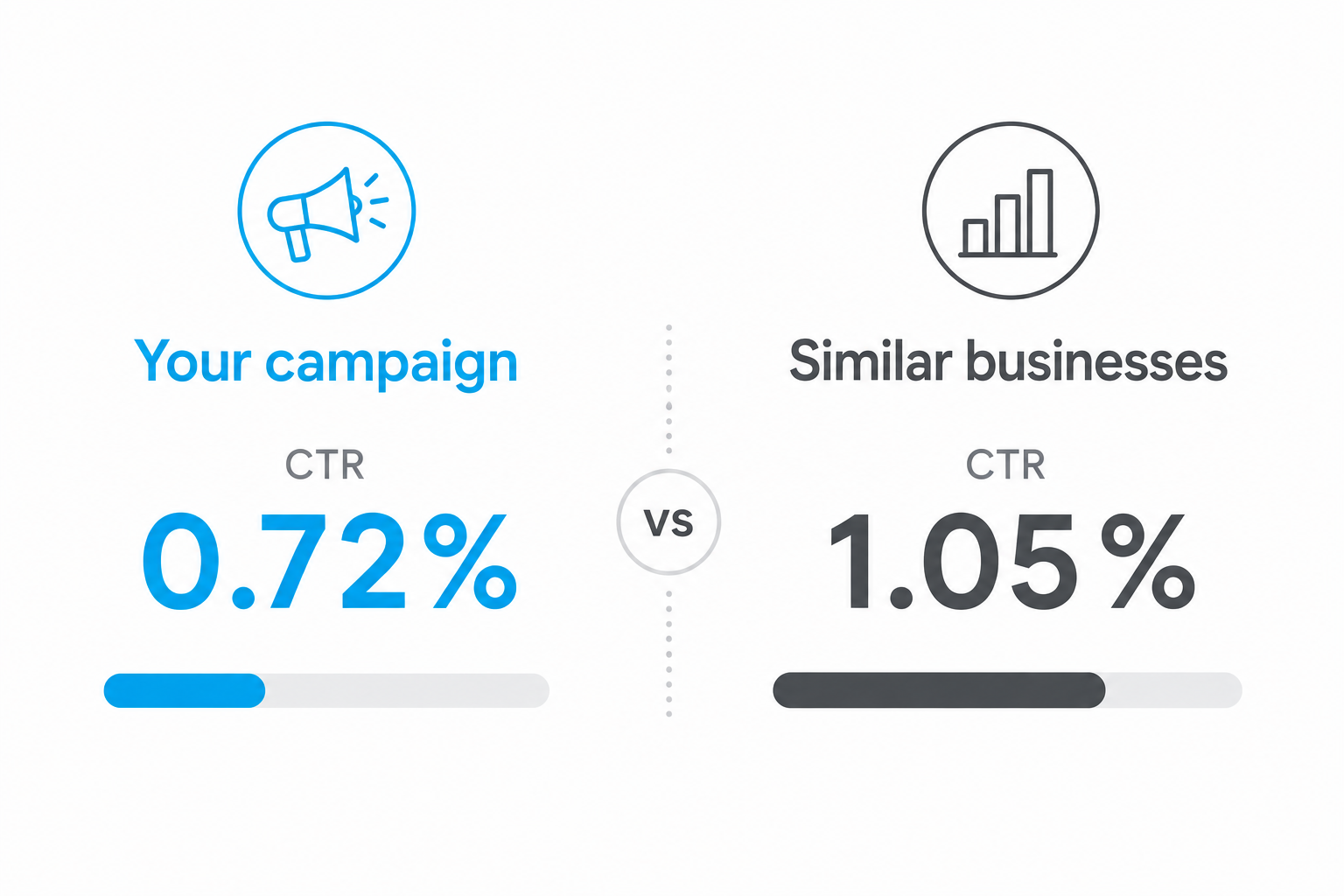
For CMOs working with constrained budgets and increasing pressure to demonstrate growth, that distinction matters. Gartner reports that marketing budgets increased only 1.3% from 2025 to 2026, while pressure on CMOs to deliver growth and AI transformation continues to rise.
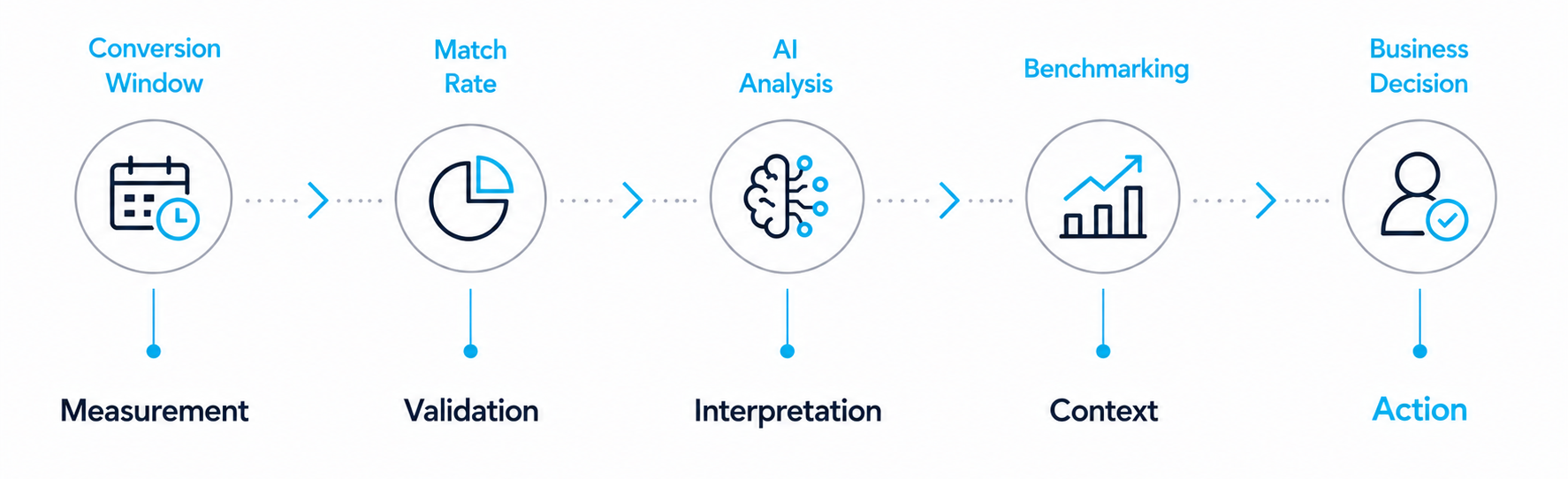
The August GA4 updates may look unrelated at first, but together they address different points in the journey from data to decision. Conversion windows determine what receives credit, campaign validation determines what actually connects, AI helps teams investigate MarTech performance faster, and benchmarking adds the context needed to understand whether performance is truly competitive.
Together, these changes point toward a different role for Google Analytics — not simply a place to understand what happened, but a platform that helps marketing teams understand what matters, what can be trusted, and what should happen next.
Google Analytics is becoming a system that helps organizations determine what matters, what can be trusted and what should happen next. But that future depends on the foundation underneath it. If teams use different definitions, campaign data remains disconnected, or measurement standards vary across the MarTech ecosystem, faster Analytics can simply produce faster answers to the wrong questions. The technology may be getting better at finding answers, but organizations still need to trust the questions, definitions and data behind those answers.
That is the deeper issue explored in When Every Dashboard Tells a Different Story — what happens when different teams measure the same business reality in different ways.
A smarter Analytics interface cannot create alignment that does not exist underneath it.
The most important Google Analytics update this August is not a single feature, it is the direction behind them. Attribution determines what receives credit. Validation determines what can be trusted. AI determines how quickly teams can investigate. Benchmarking determines whether performance has meaningful context. Together, these capabilities create a shorter path from measurement to business action.
But there is a catch.
The faster Analytics becomes, the more important the foundation underneath it becomes. A trusted measurement framework turns speed into action. A fragmented one can simply produce faster answers to the wrong question. The future of digital analytics will not be defined by how quickly organizations can find answers. It will be defined by how confidently they can act on them.
For enterprise marketing teams, that means building a measurement foundation where attribution reflects the customer journey, campaign data connects across platforms, and analytics can move from identifying what happened to helping teams decide what to do next. Because the fastest answer is not necessarily the most valuable one.
The most valuable answer is the one the business can trust enough to act on.


🔗 Sources:
Google Analytics
What's new in Google Analytics
Change the key event lookback window
Evolve your marketing with new AI tools
Forrester
AI Moves Marketing Measurement From Insights To Action
Gartner
Beyond Productivity: How CMOs Can Use AI to Drive Strategic Growth